
PALEOTECHNICS HANDBOOKS

California Bay Laurel
by Tamara Wilder & Steven Edholm
(Paleotechnics Handbook #24, 2019)
Descriptions of this bountiful tree, instructions on how to harvest and process the nuts and recipes on how to transform the roasted nuts into delicious and stimulating treats.
Folded stapled 8 page booklet in Full Color
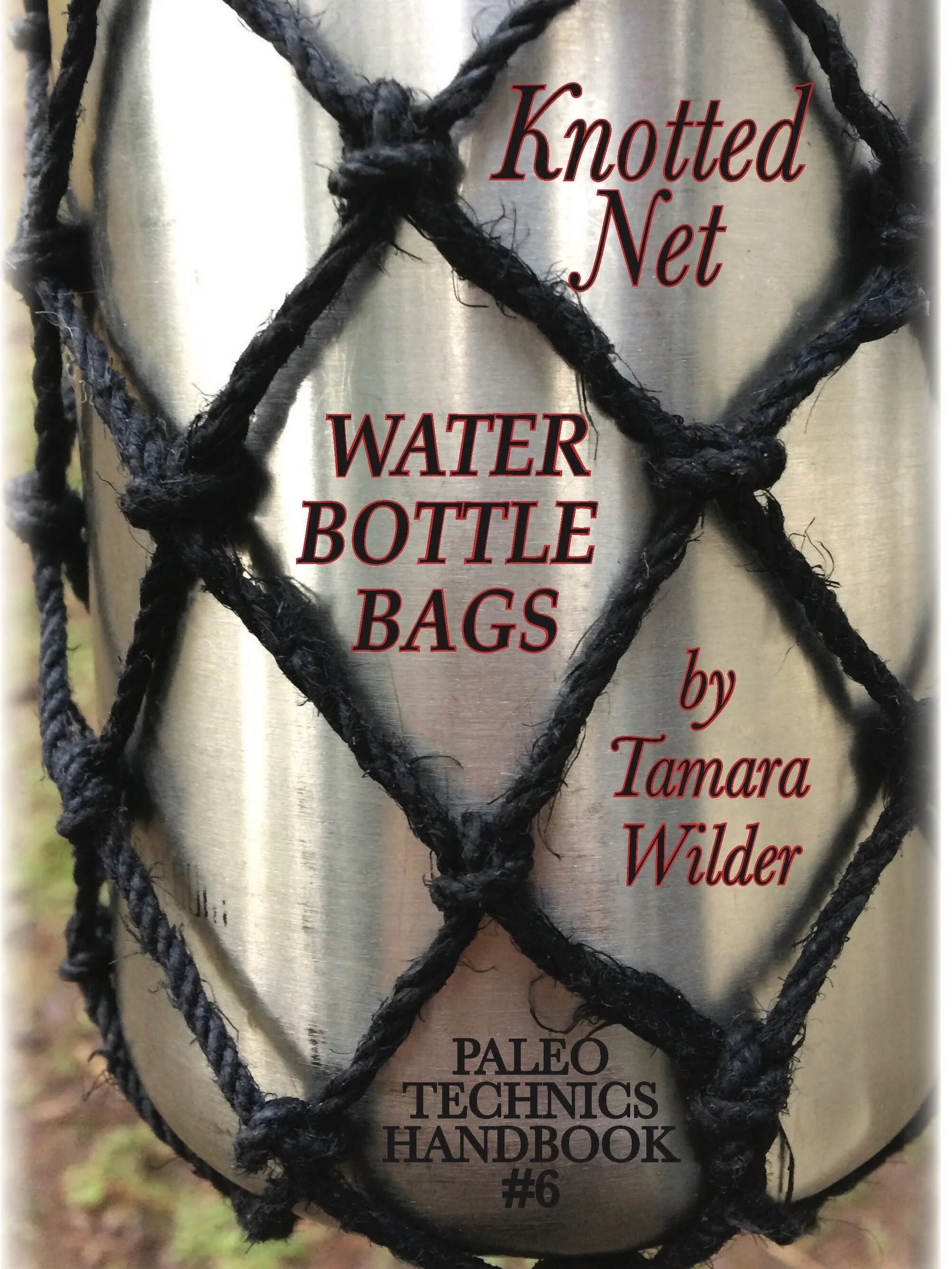
Paleotechnics Handbook #6
2019
by Tamara Wilder
Detailed photo step-by-step guide to making a knotted net using a “sheet bend” netting knot.
Includes directions for using a “bowline” knot to create the initial loop and finishing techniques.
24 page photocopied stapled booklet
8.5” X 5.5” X 1”
$10 (black & white)

A Basic Guide to Processing Animals and Preserving Parts for Later Use
Paleotechnics Handbook #8,
Revised Edition 2012
by Steven Edholm & Tamara Wilder
Basic information on how to take a carcass to the point that the parts can be used and preserved. Packed with lots of little detail that speak from experience.
32 page photocopied stapled booklet
8.5” X 5.5” X .125”

A Guide to Selection and Maintenance of Steel Edges
Paleotechnics Handbook #7,
2007
by Steven Edholm
w/ Tamara Wilder
Good information on how to judge steel and tool quality and keep good edges on steel tools to maximize their usefulness.
34 page photocopied stapled booklet
8.5” X 5.5” X .125”

Approaching Wildcrafting with Knowledge and Intent
Paleotechnics Handbook #1
2008
by Steven Edholm and Tamara Wilder
Practical information, philosophy and ethics related to gathering wild plants.
Folded stapled 20 page booklet

Pig Slaughtering, Processing, Cooking & Eating
Paleotechnics Handbook #23
Fully Revised Edition 1/2020
by Tamara Wilder
Basic information, recipes and lots of other stuff you need to know to both slaughter a pig and also use (and eat) all the parts.
Packed with lots of little details that speak from experience.
44 page photocopied stapled booklet
8.5” X 5.5” X .125”
CHAPTERS FROM OUR BUCKSKIN BOOK
These chapters from our book are made available for your use.
Please respect our intellectual property and do not reproduce themon any large scale without permission from the authors.
In the PDF conversion process some glitches and mistakes occur and we have left graphics looking rough in order to reduce file size.
The graphics in the book look much better...really!
Enjoy.

Chapter 3
Why Make Buckskin?
(132.5K pdf download)
Chapter 4
Brief Overview
(11.5 K pdf download)
Chapter 5
Why Wet-Scrape and What Is Dry-Scrape?
(635.5K pdf download)
Chapter 7
Tools (3.5MB! pdf download)
Sharpening (689.7K pdf download)
Chapter 11
Skinning, Heads, Brains & So On
(1.7MB download)
Chapter 12
Care and Storage of Raw Hides
(240.5K pdf download)
Chapter 14
Fleshing
(421.8K pdf download)
Chapter 28
Uses of the Deer
(1.4MB pdf download)

The Ancient Art of Braintanning
by Steven Edholm & Tamara WIlder
Buckskin: The Ancient Art of Braintanning has been out of print for the past several years due to technological difficulties with transitioning from the older form of printing “flats” to a digital format.
Hopefully the wait will be worth it and we really appreciate everyone’s patience and support.
Any orders placed here will be put on BACKORDER and will be shipped via USPS as soon as it is available.
Backorders will automatically include the digital version for FREE, which will be delivered via email as soon as it is available.
365 pages
9”x 6” x 1”
list price $19.95 (backorder price)
(price of new edition may change depending on cost of printing)
Read the recent Blog Update

ARTICLES, ETC....
Some have been published in the Society of Primitive Technology Bulletins, some are handouts which we give to our students,
some are online versions of our handbook series, and some are online articles.
Again, please respect our intellectual property and do not reproduce them on any large scale without permission from the authors.
”Learn to Burn” article
Online Journal KNOW
9/25/12
The Dirt on Colors
(400k pdf download)
A Mineral Pigment Primer, Procesing and Using Earth Pigments and Natural Binders.
from SPT Bulletin #15
The California Bay Laurel Tree
Natural History and Uses of the Bay Tree (Umbellularia californica) including roasting the edible nuts which contain a mild stimulant.
Click here to purchase printed handbook.
Stringmaking Handout
(pdf download)
Cordage Fiber Plants Intensive
(pdf download)
Ground Iris:
Native Californian Fiber Plant
Extracting Fiber from the Leaves of Wild Iris, Iris macrosiphon for use as a material in making cordage, string and ropes.

PDF of our handbook of the same name.
Click here to purchase printed handbook.

HTML version of our handbook of the same name.